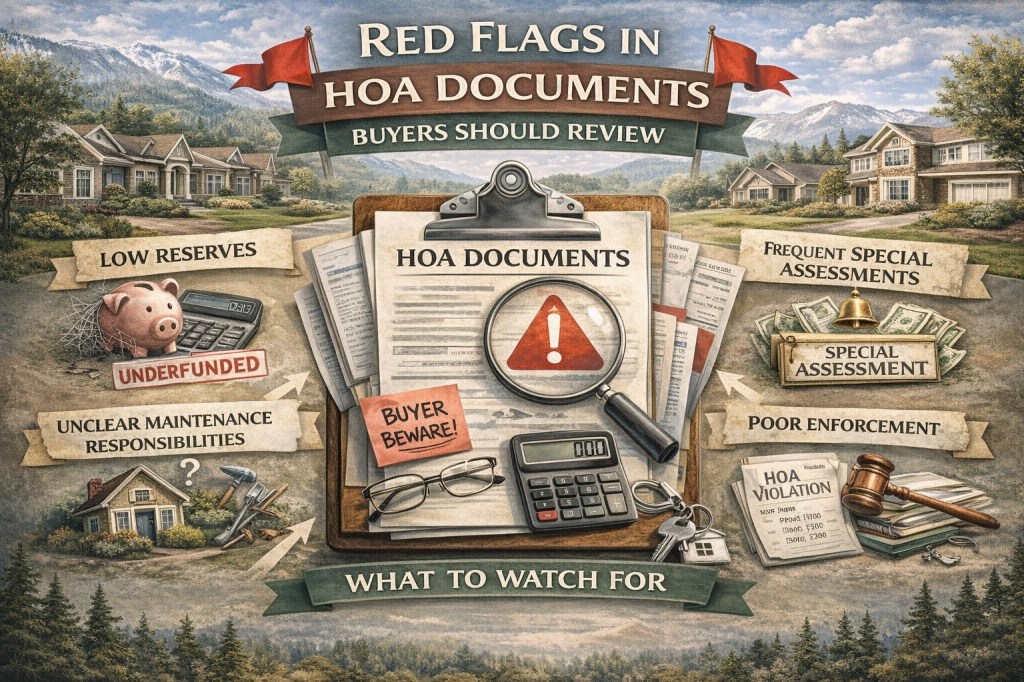
HOA documents are not the most exciting part of buying a home, but in Colorado Springs, they can quietly shape your finances, flexibility, and stress level long after move-in. Buyers often skim these documents late in the process, assuming they’re mostly boilerplate. That’s where trouble starts.
HOAs vary widely here. Some are well-run, transparent, and homeowner-friendly. Others… not so much. Knowing what to look for can help buyers avoid costly surprises and make a confident decision.



Financial Red Flags in HOA Documents
Low or Inadequate Reserves
One of the biggest warning signs is an HOA with low reserve funds. Reserves are savings set aside for major expenses like roofing, road resurfacing, exterior paint, or structural repairs.
If the reserve balance is low and major components are aging, special assessments are more likely. Buyers should review the reserve study (if available) and compare it to the age and condition of the community.
Frequent or Recent Special Assessments
Special assessments aren’t always bad, but a history of repeated assessments can signal poor financial planning. Look for patterns, not just one-time events.
Meeting minutes often reveal whether assessments are becoming a regular occurrence rather than an exception.
Rapidly Increasing HOA Dues
Some dues increase over time is normal. Sharp or frequent increases without clear explanations can indicate deferred maintenance, rising insurance costs, or mismanagement.
Rules That Limit Flexibility
Rental Restrictions
Many Colorado Springs HOAs restrict rentals, cap the number of rental units, or prohibit short-term rentals entirely. This matters even if you don’t plan to rent now. Life changes.
If future flexibility is important, rental language should be reviewed carefully.
Pet Restrictions
Pet rules are another common issue. HOAs may limit the number, size, or breed of pets. Buyers often assume “pet-friendly” means unlimited, which is rarely the case.
Exterior Control and Approval Requirements
HOAs often require approval for exterior changes, including fences, paint colors, sheds, solar panels, or landscaping. Overly restrictive design guidelines can make even simple updates frustrating.
Maintenance Responsibilities That Aren’t Clear
Who Fixes What
HOA documents should clearly define maintenance responsibilities. Ambiguity is a red flag.
For example, if the HOA covers exterior maintenance, does that include roofs, siding, windows, or only paint? If responsibilities aren’t clearly spelled out, disputes can arise later.
Deferred Maintenance Language
Meeting minutes sometimes reveal ongoing delays in repairs. Phrases like “postponed,” “under review,” or “to be addressed in a future phase” appear more often than buyers realize.
Insurance Gaps Buyers Miss
HOA Insurance Coverage Limitations
HOA master policies vary. Some cover exterior structures fully, others only partially. Buyers may need additional insurance coverage depending on where HOA responsibility ends and homeowner responsibility begins.
Understanding this distinction helps prevent underinsurance.
Governance and Management Concerns
Poorly Documented Meetings
Missing or vague meeting minutes can signal a lack of transparency. Well-run HOAs document decisions, budgets, and upcoming projects clearly.
High Turnover in HOA Boards or Management
Frequent changes in leadership or management companies can indicate internal conflict or dissatisfaction. Stability matters.
Many HOAs in Colorado Springs use third-party management companies. The quality of management directly impacts communication, enforcement, and financial health.
Community Standards and Enforcement Issues
Inconsistent Rule Enforcement
If meeting notes reference disputes over enforcement or selective rule application, that’s worth noting. Inconsistent enforcement can create tension and legal risk.
Excessive Fines or Penalties
Review fine schedules carefully. Overly aggressive fines for minor issues can be a red flag, especially if enforcement appears rigid rather than reasonable.
Local Resources Buyers Can Use
For HOA-related questions and governance standards, buyers can review resources from the Colorado Division of Real Estate, which oversees HOA information and consumer protections in Colorado.
Buyers can also review guidance from the Colorado HOA Information and Resource Center, a valuable tool for understanding HOA laws, rights, and responsibilities.
How Local Professionals Help Buyers Navigate HOAs
Local service providers often see HOA issues firsthand. Landscapers, maintenance vendors, and inspectors frequently work within HOA guidelines and can offer insight into how strict or functional a community really is.
Businesses like Phelan Gardens and Rick’s Garden Center regularly help homeowners comply with HOA landscaping rules while keeping maintenance manageable. Their experience can be especially helpful in communities with detailed exterior standards.
What Buyers Should Always Review Carefully
Before moving forward, buyers should make sure they understand:
Reserve balances and upcoming projects
Rules around rentals, pets, and exterior changes
Insurance responsibilities and coverage gaps
History of assessments and dues increases
How enforcement and governance actually function
HOA documents aren’t just legal paperwork. They’re a roadmap for how the community operates day to day.
Final Thoughts
Red flags in HOA documents don’t always mean walk away, but they do mean pause, ask questions, and understand what you’re buying into.
In Colorado Springs, HOA living can be a great fit when expectations are clear and management is strong. Reviewing documents carefully helps buyers avoid surprises and ensures the neighborhood truly aligns with their lifestyle and long-term plans.
A little diligence up front can save a lot of frustration later.
 Colorado Springs Real Estate Blog
Leave a comment