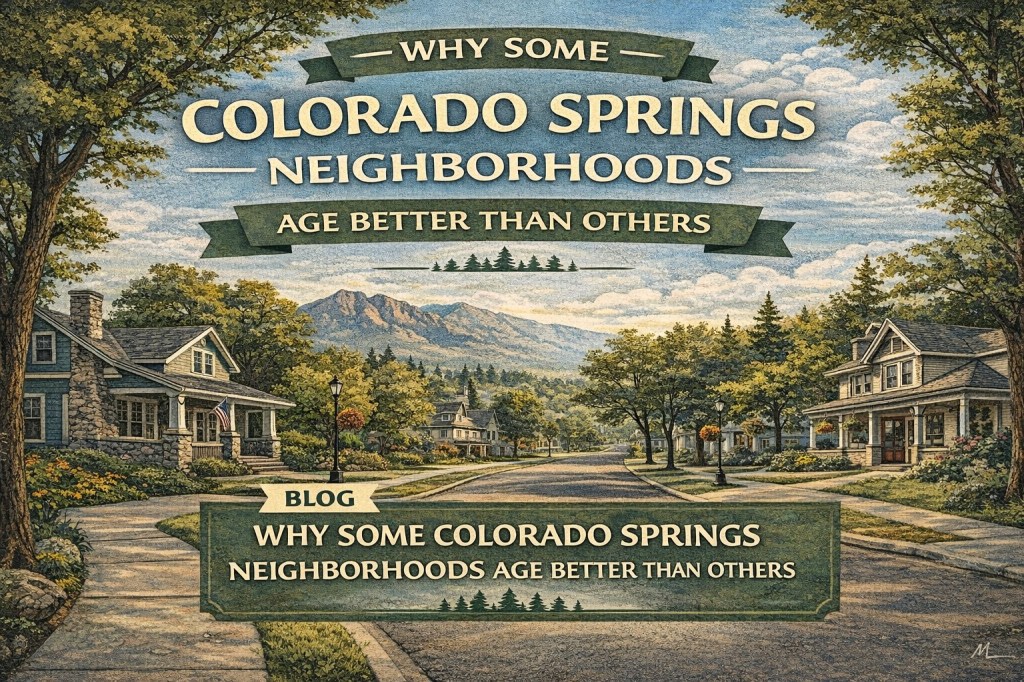
If you’ve lived in Colorado Springs long enough, you’ve probably noticed it. Two neighborhoods built around the same time, with similar home styles and price points, can age very differently. One feels established, cohesive, and desirable decades later. The other feels tired, fragmented, or stuck in time. This doesn’t happen by accident, and it’s not just about how old the homes are.
Neighborhoods age well (or poorly) based on planning, location, upkeep, and how the area evolves alongside the city. For buyers, homeowners, and long-term investors, understanding these patterns can make a huge difference.


It Starts With Original Planning and Layout
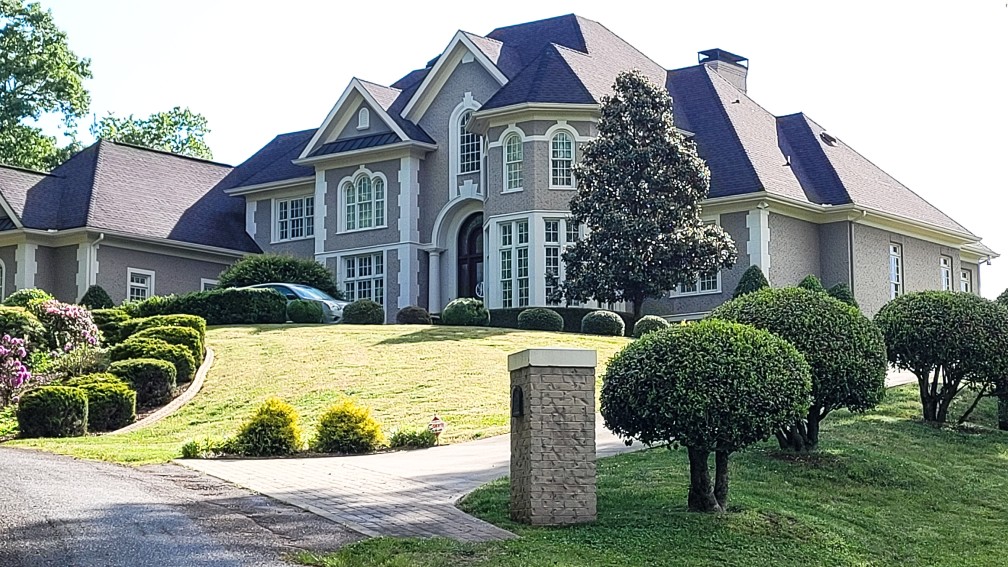
Neighborhoods that were thoughtfully planned from the beginning tend to age better. Streets that follow the land, sidewalks that encourage walking, green space that was preserved instead of filled in, and lots that aren’t crammed wall to wall all contribute to longevity.
Areas like Old Colorado City and parts of Broadmoor benefit from layouts designed for people, not just cars. Even as homes are remodeled and updated, the bones of the neighborhood still work.
By contrast, areas built quickly to meet demand, especially during rapid growth periods, may lack cohesion. Narrow streets, minimal open space, and limited parking can feel more problematic as the neighborhood ages and household needs change.
Location and Proximity Matter Long Term
Neighborhoods that age well are often close to things that remain valuable over time: parks, trails, schools, and employment centers. Proximity to downtown, established corridors, or protected open space helps insulate neighborhoods from drastic swings in desirability.
Homes near places like Downtown Colorado Springs, Garden of the Gods, and Cheyenne Mountain State Park continue to benefit from location even as the city grows outward.
When neighborhoods are built far from amenities with no clear long-term plan for development around them, they can struggle as preferences shift. What feels “new” at first can feel isolated later.
HOAs and Community Standards Play a Role
This one can be controversial, but it matters. Neighborhoods with reasonable, well-managed HOAs often age better than those with no standards or overly restrictive ones.
HOAs that focus on exterior maintenance, landscaping, and long-term infrastructure help keep a neighborhood visually cohesive. Roofs get replaced, paint colors stay coordinated, and common areas are maintained. Over time, that consistency protects values.
On the flip side, neighborhoods with no guidelines at all can become visually inconsistent, while overly strict HOAs can deter future buyers. Balance is key.
Investment in Infrastructure Makes a Difference
Neighborhoods don’t age in isolation. City investment matters. Areas that see continued attention to roads, utilities, schools, and public spaces tend to remain desirable longer.
Colorado Springs neighborhoods near well-funded school zones, updated parks, and maintained roadways tend to outperform areas where infrastructure has been deferred. You can often see the difference just by driving through.
Resources like the City of Colorado Springs planning and development initiatives help signal where long-term investment is happening.
Pride of Ownership Is Huge
One of the biggest indicators of how a neighborhood will age is simple: do people care?
When homeowners stay longer, maintain their properties, and invest in updates over time, neighborhoods age gracefully. Mature trees, updated kitchens, well-kept yards, and thoughtful renovations all contribute to a sense of stability.
Areas like Hillside, Patty Jewett, and parts of Ivywild are great examples of neighborhoods where pride of ownership and gradual reinvestment have completely changed the narrative over time.
Adaptability to Changing Buyer Needs
Neighborhoods that age well are flexible. Homes that can be expanded, remodeled, or repurposed keep up with changing lifestyles. Think main-level living potential, basements that can be finished, or lots that allow for additions.
Older neighborhoods often shine here. While they may not have started with open floor plans, many can be reimagined in ways that newer cookie-cutter layouts cannot.
Buyers today want walkability, access to trails, work-from-home flexibility, and multi-generational options. Neighborhoods that can adapt to those needs remain competitive.
The Role of Natural Features and Open Space
Neighborhoods near permanent open space tend to age exceptionally well. Trails, parks, and protected land don’t get torn down or relocated. That stability matters.
Homes near Red Rock Canyon Open Space, Palmer Park, and Stratton Open Space continue to attract buyers because access to nature doesn’t go out of style. Open space also limits overdevelopment, which helps preserve neighborhood character.
What Buyers Should Look For Today
If you’re trying to predict how a neighborhood will age, ask a few practical questions:
Are homes being updated or neglected
Is there evidence of long-term ownership
Are roads, sidewalks, and utilities maintained
Is the area near amenities that will still matter in 20 years
These indicators often matter more than the year the home was built.
Final Thoughts
Some Colorado Springs neighborhoods age better than others because they were built with intention, supported by infrastructure, and cared for by the people who live there. Age alone isn’t the issue. Neglect is.
The most resilient neighborhoods are those that evolve while staying rooted in what made them desirable in the first place.
And if you’re wondering why certain areas still feel charming decades later, it’s usually because someone planned ahead, someone kept investing, and the neighborhood never stopped adapting.
 Colorado Springs Real Estate Blog
Leave a comment