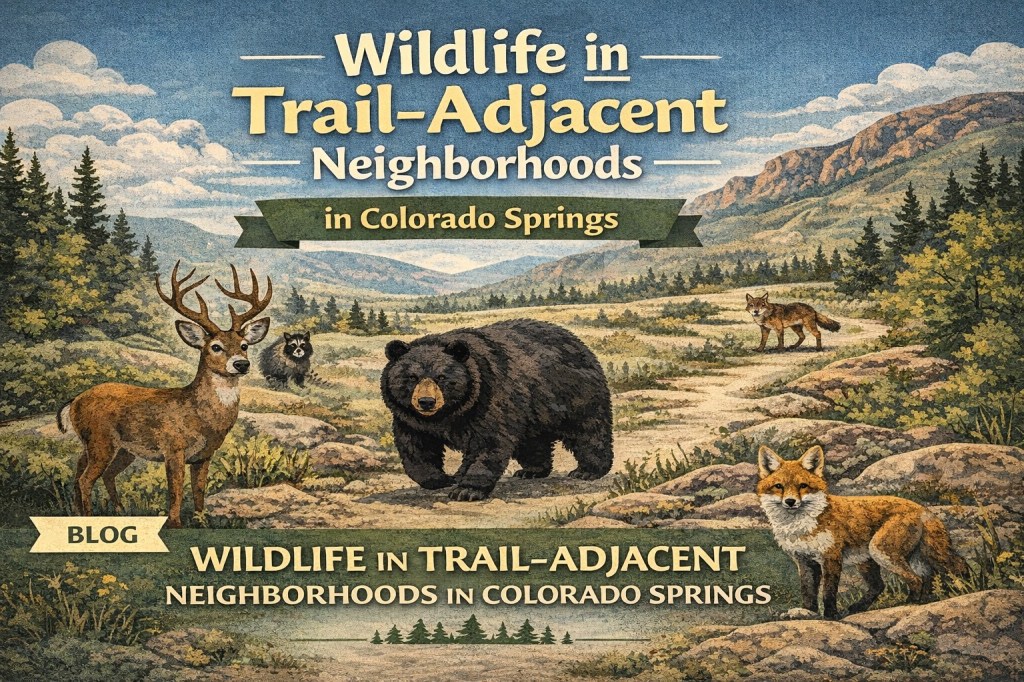
Living near trails in Colorado Springs is one of those pinch-me perks. You get morning light on the foothills, quick access to open space, and the kind of quiet that makes city noise feel optional. The trade-off is that you’re sharing the neighborhood with some very confident four-legged locals who absolutely do not recognize property lines.
If you’re buying or living near trail systems and open space, here’s what to know so you can enjoy the scenery without turning your trash can into a wildlife buffet.


Living next to trails and open space in Colorado Springs is one of those lifestyle choices people dream about before they move here. Morning walks with mountain views. Easy access to hiking without loading the car. Quiet evenings where the loudest thing is the wind through the pines. The flip side is that when you live close to nature, nature occasionally drops by unannounced and usually without knocking.
If you are buying or already living in a trail-adjacent neighborhood, understanding local wildlife patterns can help you enjoy the experience without unnecessary surprises or expensive lessons learned the hard way.
Why Wildlife Is So Common Near Trails Here
Colorado Springs is uniquely positioned where urban neighborhoods meet foothills, mesas, and protected open space. Many homes back directly to greenbelts, drainage corridors, and trail systems that wildlife have used long before neighborhoods were built.
Areas near Garden of the Gods, Red Rock Canyon Open Space, Ute Valley Park, Cheyenne Mountain State Park, and Stratton Open Space tend to see consistent wildlife activity. These areas provide food, water, and shelter. Trails often follow the same natural travel corridors animals already use, which means nearby homes are part of that ecosystem whether they planned on it or not.
Wildlife You Are Most Likely to See
Deer
Deer are by far the most common visitors. In neighborhoods near trails in Rockrimmon, Peregrine, Broadmoor Bluffs, and parts of northwest Colorado Springs, deer sightings are a daily occurrence. They are generally harmless but can do real damage to landscaping. Young trees, roses, and vegetable gardens are especially appealing.
Coyotes and Foxes
Coyotes and foxes frequently travel along trail systems and open space edges. They are usually active early in the morning and after sunset. While they avoid people, small pets can be at risk if left unattended. This is especially true in neighborhoods bordering Ute Valley and Cheyenne Mountain.
Black Bears
Bear sightings happen almost every year, particularly in late summer and fall. Most bear activity in residential areas is tied to food access. Unsecured trash, bird feeders, or outdoor pet food are the biggest culprits. Once a bear finds an easy meal, it will return and often bring friends.
Raccoons and Skunks
These animals thrive near human activity. They are common near drainage areas and can cause issues with trash cans, crawl spaces, and sheds.
Mountain Lions
Rare but present. Sightings are uncommon, but mountain lions do live in the foothills and occasionally travel through trail corridors. Awareness is important for hikers, runners, and families with children near open space.
How Wildlife Impacts Day-to-Day Living
Trail-adjacent living often means adjusting routines slightly. Trash cans may need to be secured more carefully. Landscaping choices become more intentional. Pets may need supervision even in fenced yards.
Many homeowners find that once these habits are in place, wildlife becomes part of the charm rather than a constant concern.
Practical Ways to Coexist With Wildlife
Secure trash properly
Wildlife-resistant trash containers are strongly recommended in foothill neighborhoods. Never leave trash bags outside overnight. If bears are active, wait until the morning of pickup to put bins out.
Remove food attractants
Bird feeders are a major issue during bear season. Consider removing them entirely from late summer through fall. Store pet food indoors and clean grills regularly.
Protect pets
Keep dogs leashed near trails and supervise small pets outdoors. Avoid walking pets at dawn and dusk when wildlife is most active.
Landscape with intention
Deer-resistant plants and strategic fencing can help reduce damage. Local nurseries such as Rick’s Garden Center and Phelan Gardens often provide guidance on plants that are less appealing to deer in this climate.
Know your local resources
Colorado Parks and Wildlife is the best source for current wildlife advisories, bear activity maps, and safety recommendations specific to Colorado Springs. They also provide guidance on what to do if wildlife becomes a recurring issue.
What Buyers Should Ask Before Purchasing Near Trails
Trail access is a huge lifestyle benefit, but it is smart to go in informed.
How close is the home to open space or a drainage corridor
Does the neighborhood use wildlife-resistant trash service
Are there HOA guidelines around fencing or landscaping
Have there been repeated wildlife issues at the property
These questions are not meant to scare buyers off. They help set realistic expectations and prevent surprises after move-in.
Seasonal Wildlife Patterns in Colorado Springs
Wildlife activity changes throughout the year. Spring brings increased movement as animals have young. Summer sees more evening activity. Fall is peak bear season as animals prepare for winter. During colder months, wildlife often moves lower in elevation, bringing them closer to neighborhoods.
Homeowners near trails notice these patterns more than those in fully built-out areas.
Why So Many People Still Choose Trail-Adjacent Homes
Despite the considerations, trail-adjacent living remains highly desirable. The ability to step outside and access miles of trails, enjoy open space views, and feel connected to the landscape is a major reason people choose Colorado Springs.
For many homeowners, the occasional deer in the yard or fox on the trail is a reminder of why they chose the location in the first place.
Final Thoughts
Living near trails in Colorado Springs means sharing space with wildlife. With a little preparation and local knowledge, it is entirely manageable and often deeply rewarding.
You may need to secure your trash better and rethink your landscaping, but the trade-off is daily access to nature that most people only experience on vacation.
And yes, the deer will still judge your landscaping choices. Consider it their way of saying welcome to the neighborhood.
 Colorado Springs Real Estate Blog
Leave a comment