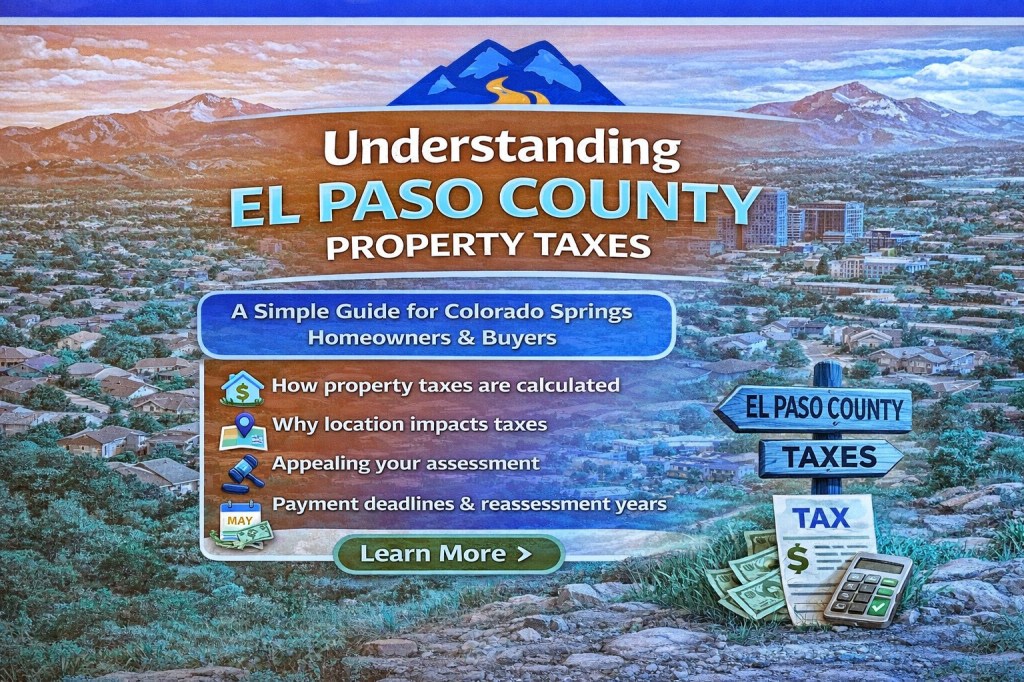
Understanding El Paso County Property Taxes
A Simple Guide for Colorado Springs Homeowners & Buyers


Property taxes are one of those homeownership topics that feel confusing until they suddenly matter a lot. In El Paso County, property taxes fund essential local services, but how they’re calculated, billed, and adjusted isn’t always obvious, especially for buyers new to Colorado Springs.
Let’s break it down in a clear, no-jargon way so you know what you’re paying, why you’re paying it, and what can change over time.
Who Sets Property Taxes in El Paso County?
Property taxes involve two separate county offices, each with a different job:
- El Paso County Assessor
Determines your property’s assessed value - El Paso County Treasurer
Sends tax bills and collects payments
This distinction matters because the Assessor decides value, not how much tax you pay, and the Treasurer collects, not calculates.
How Property Taxes Are Calculated (The Big Picture)
El Paso County property taxes are based on three main pieces:
- Actual Value
The Assessor estimates market value using recent sales, location, and property characteristics. - Assessment Rate
For residential properties in Colorado, only a percentage of the value is taxable.
(This rate can change statewide and is set by Colorado law.) - Mill Levy
This is where location matters. Mill levies vary by school district, city limits, fire districts, and special taxing districts.
Formula (simplified):
Actual Value × Assessment Rate × Mill Levy = Property Taxes Owed
Why Two Similar Homes Can Have Very Different Taxes
It’s common to see neighboring homes with noticeably different tax bills. Reasons include:
- Different school districts
- One home inside city limits, one outside
- Special metro or improvement districts
- New construction vs. long-established homes
For example, newer developments may include metro districts that temporarily raise property taxes to fund infrastructure like roads and utilities.
Colorado’s Reassessment Cycle
Colorado reassesses property values every two years, based on sales data from the previous 18-month period.
This means:
- Your home value may increase even if you didn’t make changes
- Taxes can rise even if the mill levy stays the same
- Market shifts affect assessments countywide
Reassessment years tend to surprise homeowners the most, especially after strong real estate markets.
How to Look Up Your Property Taxes
Homeowners and buyers can easily check tax details online.
Helpful links:
- El Paso County Assessor:
👉 https://assessor.elpasoco.com - El Paso County Treasurer:
👉 https://treasurer.elpasoco.com
You can view:
- Current and prior tax bills
- Assessed value history
- Payment status
- Due dates and penalties
This is especially useful for buyers comparing homes or budgeting after a purchase.
When and How Property Taxes Are Paid
El Paso County allows two payment options:
- Half payment due mid-February and mid-June
- Full payment due mid-April
Late payments result in interest and penalties, so deadlines matter.
If you have a mortgage, property taxes are often paid through an escrow account, meaning the lender collects a portion monthly and pays the county on your behalf.
Can You Appeal Your Property Taxes?
Yes. If you believe your assessed value is incorrect, you can file an appeal with the Assessor during the designated appeal window.
Common reasons for appeals include:
- Comparable sales used don’t reflect your home
- Property condition issues weren’t considered
- Incorrect square footage or features
Appeals focus on value accuracy, not affordability.
Property Taxes and Real Estate Transactions
For buyers:
- Taxes shown in listings are based on the current owner’s assessment
- New purchase prices often trigger reassessment
- Taxes may increase after closing
For sellers:
- High taxes can impact buyer perception
- Accurate explanations help prevent surprises
- Understanding districts adds confidence during negotiations
This is why tax estimates are often discussed early in the buying process.
Final Thoughts
Property taxes in El Paso County aren’t random, but they are layered. Understanding how values, assessment rates, and mill levies work together makes it easier to budget, plan, and avoid surprises.
Whether you’re buying your first home, relocating to Colorado Springs, or simply reviewing your annual tax bill, a little clarity goes a long way. Taxes may not be exciting, but knowing how they work puts you in control, and control is always a good thing.
If you ever want help reviewing a property’s tax history, understanding how location affects taxes, or estimating future changes, I’m always happy to help explain it clearly and calmly… no calculator-induced panic required
 Colorado Springs Real Estate Blog
Leave a comment